To stay warm in cold weather, dress in three layers, cover your head, hands and feet, stay dry, and keep the rooms you use at a steady temperature with heating that is safe and properly ventilated. Wind and wet clothing steal heat far faster than cold air alone, so they matter as much as the number on the thermometer.
A cold snap, a short spell of unusually cold weather lasting a few days, can cause hypothermia and frostbite, worsen heart and lung conditions and lead to carbon monoxide poisoning when heaters are misused. Older adults, babies, people with chronic illness and anyone sleeping outdoors are most at risk. In an emergency, call 911 in the US and Canada, 999 in the UK, 112 in the EU or 000 in Australia.
Key takeaways
- Hypothermia starts when body temperature falls below 35 °C (95 °F); confusion, slurred speech and drowsiness are danger signs.
- Three thin layers (a moisture-wicking base, an insulating middle and a wind and waterproof shell) keep you warmer than one thick garment.
- The UK Health Security Agency advises heating the rooms you use most to at least 18 °C (65 °F).
- Never run a generator, grill or camping stove indoors, in a garage or in a tent: carbon monoxide is invisible and odorless.
- Since October 2024, the US National Weather Service warns of dangerous cold with Cold Weather Advisories and Extreme Cold Warnings.
What does a cold snap mean?
A cold snap is a sudden drop to unusually low temperatures that lasts from a day or two to about a week, usually after a cold front lets arctic or polar air flow south. It is an informal term, not an official category.
- United States: since October 1, 2024, the National Weather Service issues a Cold Weather Advisory, an Extreme Cold Watch or an Extreme Cold Warning, replacing the old wind chill products. Thresholds are set by each local office, so the same alert means different temperatures in Florida and Minnesota.
- United Kingdom: the UK Health Security Agency and the Met Office issue yellow, amber and red cold-health alerts for England, with the main season running from November 1 to March 31.
Wind counts as much as temperature. At 0 °C (32 °F) with a 30 km/h (19 mph) wind, exposed skin cools as if it were about -6 °C (21 °F). Our guide to the feels like temperature and wind chill explains how that figure is calculated.
Hypothermia symptoms: signs and stages
Hypothermia happens when your body loses heat faster than it can produce it and its core temperature falls below 35 °C (95 °F). Frostbite is a separate injury: skin and the tissue beneath it freeze, most often on fingers, toes, nose, ears and cheeks.
| Condition | Core temperature | Signs | What to do |
|---|---|---|---|
| Mild hypothermia | 32–35 °C (90–95 °F) | Intense shivering, cold pale skin, clumsy hands, tiredness | Move somewhere warm, remove wet clothing, wrap in blankets, give warm drinks without alcohol |
| Moderate to severe hypothermia | Below 32 °C (90 °F) | Confusion, slurred speech, drowsiness, slow breathing; shivering may stop | Call the emergency number, handle the person gently, warm the trunk first with blankets |
| Frostbite | Not applicable | White, grayish-yellow or waxy skin that feels hard, numbness, tingling | Rewarm with warm, not hot, water; do not rub or use direct heat; get medical care |
The CDC lists shivering, exhaustion, confusion, fumbling hands, memory loss, slurred speech and drowsiness as the warning signs in adults. In babies, look for bright red, cold skin and very low energy.
If someone stops shivering in severe cold, it is not a good sign: it can mean hypothermia is getting worse. Alcohol does not warm you. It makes you feel warmer by widening the blood vessels in your skin, but you lose heat faster.
How to stay warm in cold weather outdoors
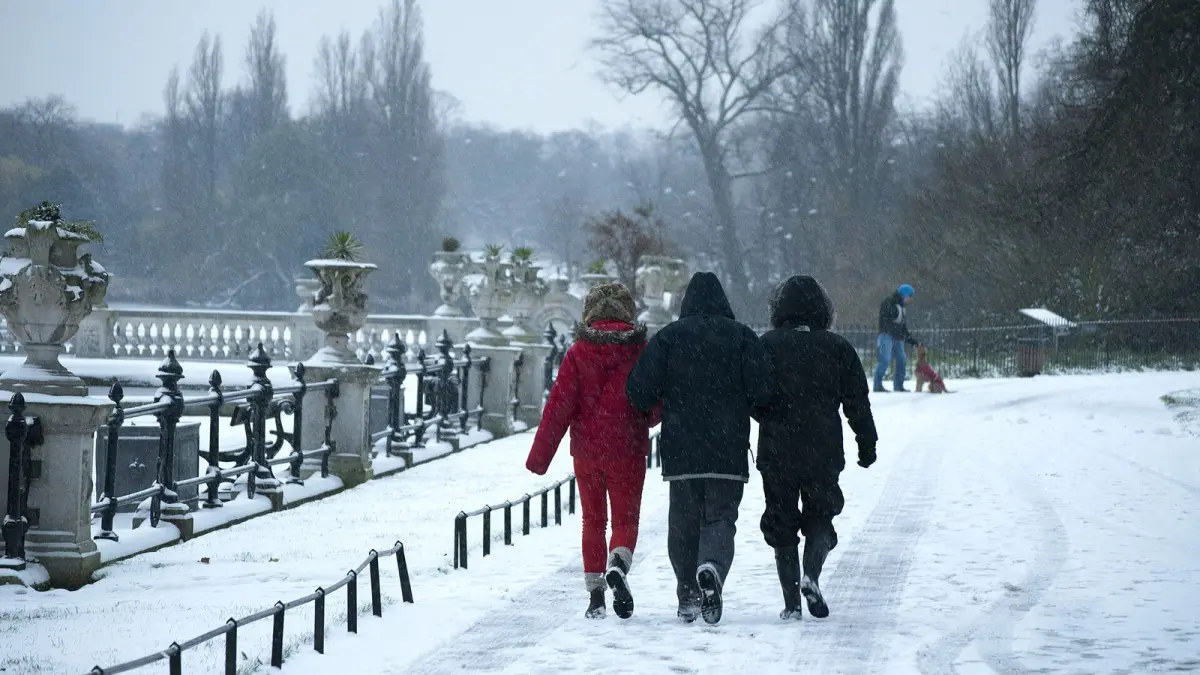
The best way to stay warm outdoors is to dress in layers and cover the parts of the body that lose heat fastest: head, neck, hands and feet. Several thin layers trap air between them and insulate better than a single bulky coat.
- Base layer: thermal top made of synthetic fabric or merino wool, which moves sweat away from your skin. Avoid cotton if you will be active, because it holds moisture.
- Middle layer: fleece, wool sweater or down jacket, which holds in heat.
- Outer layer: a windproof and waterproof shell that blocks wind and rain.
- Accessories: hat, scarf or neck gaiter, gloves (mittens are warmer) and thick socks with waterproof boots that grip.
Stay dry and take off a layer before you start sweating. Early in the morning, watch for ice on sidewalks and roads, which we cover in frost and black ice.
How to keep warm in a cold house
To keep warm in a cold house, heat the room you spend most time in, block drafts and dress warmly indoors, rather than trying to heat every room a little. The UK Health Security Agency recommends keeping the rooms you use most, such as the living room and bedroom, at 18 °C (65 °F) or more, especially if you are 65 or older or have a health condition.
- Open curtains and blinds when the sun is out and close them at dusk.
- Use draft excluders along doors and seal gaps around windows.
- Close the doors of rooms you are not using.
- Wear a hat, slippers and layers indoors, and use a blanket on the sofa.
How to stay warm in a cold house without heat
If the power goes out or you have no heating, gather everyone in one small room, ideally one that gets sun, and close it off. Hang blankets over windows, wear layers, a hat and socks to bed, and use a hot water bottle under the covers. Sharing a room means sharing body heat.
Heating safely: carbon monoxide
Carbon monoxide is a gas you cannot see or smell, produced when fuel burns with too little oxygen. Headaches, dizziness, nausea and drowsiness in several people in the same home at once are a classic sign: get outside and call the emergency number.
- Never use a gas oven, a grill, a camping stove or a generator to heat your home.
- Run generators outdoors only, at least 20 feet (6 m) from doors, windows and vents, as the CDC advises; never in a garage, even with the door open.
- Fit a carbon monoxide alarm if you have any fuel-burning appliance.
- Keep space heaters away from curtains, bedding and clothes.
How to stay warm in a cold office
In a cold office, keep a warm layer at your desk, move around at least once an hour, and drink hot drinks, because sitting still for hours makes you lose heat.
In the UK, the Health and Safety Executive's code of practice says indoor workplaces should normally be at least 16 °C (61 °F), or 13 °C (55 °F) where work is physically demanding.
How to stay warm while camping in a tent
To stay warm in a tent, insulate yourself from the ground, use a sleeping bag rated for the night's low, and go to bed warm, dry and fed. The cold ground drains more heat than the air, so a good insulated sleeping pad matters as much as the bag.
- Insulate from the ground with a foam or insulated air pad, or both together.
- Change into dry clothes before you sleep; damp clothing from the day will chill you.
- Wear a hat and dry socks in your sleeping bag.
- Eat a snack and drink something warm before bed: your body needs fuel to make heat.
- Fill a sealed bottle with hot water and put it in your sleeping bag.
Never use a stove, charcoal or a fuel-burning heater inside a tent. When car camping, do not sleep with the engine running if snow could block the exhaust pipe: carbon monoxide can build up inside the car.
Who is most at risk in a cold snap?
Older adults are most at risk because they produce less body heat, feel the cold less and often have conditions that cold worsens. If a relative or neighbor lives alone, call or visit during a cold snap and check that their home is warm and their heating is safe.
Babies, people with heart or lung disease and those who cannot afford heating also need extra care. If someone sleeping outside seems in danger from the cold, call the emergency number.
How to use Clima de Hoy in a cold snap
Clima de Hoy shows the minimum temperature, feels like temperature and wind for each city, hour by hour and up to 14 days ahead. Check the hourly forecast for New York to see when the coldest hours arrive, or the 7 day forecast for London to know how long a cold spell will last. Heading to inland Spain? The 7 day forecast for Burgos shows how cold the plateau gets. To know when the season officially begins, read when does winter start 2026.
Frequently asked questions
What are the first symptoms of hypothermia?
The first symptoms are intense shivering, cold and pale skin, clumsy hands and tiredness. As it gets worse, confusion, slurred speech, memory loss and drowsiness appear, and shivering can stop. At that point, call 911, 999, 112 or 000 and keep the person warm while help comes.
What is the best way to keep warm in a cold house?
Heat one room well rather than the whole house a little, block drafts and wear layers, a hat and slippers indoors. The UK Health Security Agency suggests at least 18 °C (65 °F) in the rooms you use most. Use only heating that is safe indoors and never a gas oven or a grill.
How do you stay warm in a tent at night?
Sleep on an insulated pad, use a sleeping bag rated for the expected low, and change into dry clothes before bed. A hat, dry socks, a snack and a bottle of hot water in the bag make a real difference. Never use a stove or heater inside the tent.
Does drinking alcohol keep you warm?
No. Alcohol widens the blood vessels in your skin, which makes you feel warmer for a while but makes your body lose heat faster. It also dulls your judgment about how cold you are, which raises the risk of hypothermia.
Weather in your city
- Weather in Ciudad de México
- Weather in Londres
- Weather in Nueva York
- Weather in Bogotá
- Weather in Madrid
- Weather in Buenos Aires
- Weather in París
- Weather in Barcelona
- Weather in Valencia
- Weather in Sevilla
- Weather in Málaga
- Weather in Bilbao