The best time to visit Japan for weather is spring, from late March to May, and autumn, from October to late November: temperatures are mild, there is less rain than in summer, and the seasons bring the cherry blossoms (sakura) and the autumn leaves (koyo). Summer is hot and very humid, with the rainy season in June and July and the peak of typhoons in August and September. Winter is cold but sunny in Tokyo, and snowy in Hokkaido.
Key takeaways
- Spring and autumn are the best seasons: average highs in Tokyo of 19 to 24 °C (67 to 74 °F) in April and May, and 17 to 22 °C (62 to 72 °F) in October and November.
- In Tokyo, cherry trees start to bloom on 24 March on average, according to the Japan Meteorological Agency (JMA); Kyoto and Osaka are similar.
- The rainy season (tsuyu) in the Tokyo region runs on average from 7 June to 19 July.
- Typhoons can strike from summer into autumn, most often in August and September.
- Autumn colors peak in Tokyo and Kyoto from mid-November to early December.
When is the best time to visit Japan?
The best time to visit Japan is late March to May and October to November, when the weather is mild and fairly dry for walking around cities, temples and gardens. These are also the most popular dates, so hotels get expensive, especially during cherry blossom week and the autumn peak in Kyoto.
The best single months for weather are usually May and November. May is warm and green without the summer humidity; November is one of Tokyo's driest, most settled months, with an average of 96 mm (3.8 in) of rain and highs around 17 °C (62 °F).
Best time to visit Japan to avoid crowds
If you want fewer people and lower prices, January and February are good months for Tokyo, Kyoto and Osaka: it is cold, but the days are sunny and dry. Early June, before the rains set in, is another quieter window. Avoid, if you can, Golden Week (29 April to 5 May) and Obon (mid-August), two Japanese holiday periods when trains and hotels are packed.
Japan weather by month
Japan has a temperate climate with four distinct seasons in Tokyo, Kyoto and Osaka, and very different extremes: Hokkaido in the north has long, snowy winters, and Okinawa in the south is subtropical. This table shows the JMA's 1991–2020 climate normals for Tokyo.
| Month | Avg high | Avg low | Rain | What to expect |
|---|---|---|---|---|
| January | 9.8 °C (50 °F) | 1.2 °C (34 °F) | 60 mm (2.4 in) | Cold, dry and sunny |
| February | 10.9 °C (52 °F) | 2.1 °C (36 °F) | 57 mm (2.2 in) | Cold; Sapporo Snow Festival |
| March | 14.2 °C (58 °F) | 5.0 °C (41 °F) | 116 mm (4.6 in) | First cherry blossoms late in the month |
| April | 19.4 °C (67 °F) | 9.8 °C (50 °F) | 134 mm (5.3 in) | Sakura in early April; very pleasant |
| May | 23.6 °C (74 °F) | 14.6 °C (58 °F) | 140 mm (5.5 in) | Warm and green; one of the best months |
| June | 26.1 °C (79 °F) | 18.5 °C (65 °F) | 168 mm (6.6 in) | Rainy season begins; humid |
| July | 29.9 °C (86 °F) | 22.4 °C (72 °F) | 156 mm (6.1 in) | Rains end, humid heat sets in |
| August | 31.3 °C (88 °F) | 23.5 °C (74 °F) | 155 mm (6.1 in) | Hottest month; typhoons |
| September | 27.5 °C (82 °F) | 20.3 °C (69 °F) | 225 mm (8.9 in) | Hot, peak typhoon risk |
| October | 22.0 °C (72 °F) | 14.8 °C (59 °F) | 235 mm (9.3 in) | Pleasant, the odd typhoon |
| November | 16.7 °C (62 °F) | 8.8 °C (48 °F) | 96 mm (3.8 in) | Dry; autumn colors |
| December | 12.0 °C (54 °F) | 3.8 °C (39 °F) | 58 mm (2.3 in) | Cold and clear |
Kyoto, in a basin ringed by mountains, is usually a little hotter than Tokyo in summer and colder on winter mornings. Osaka, on its bay, has a climate very close to Tokyo's. Before you go, check the weather in Tokyo, the weather in Kyoto and the weather in Osaka.
Best time to visit Japan for cherry blossoms
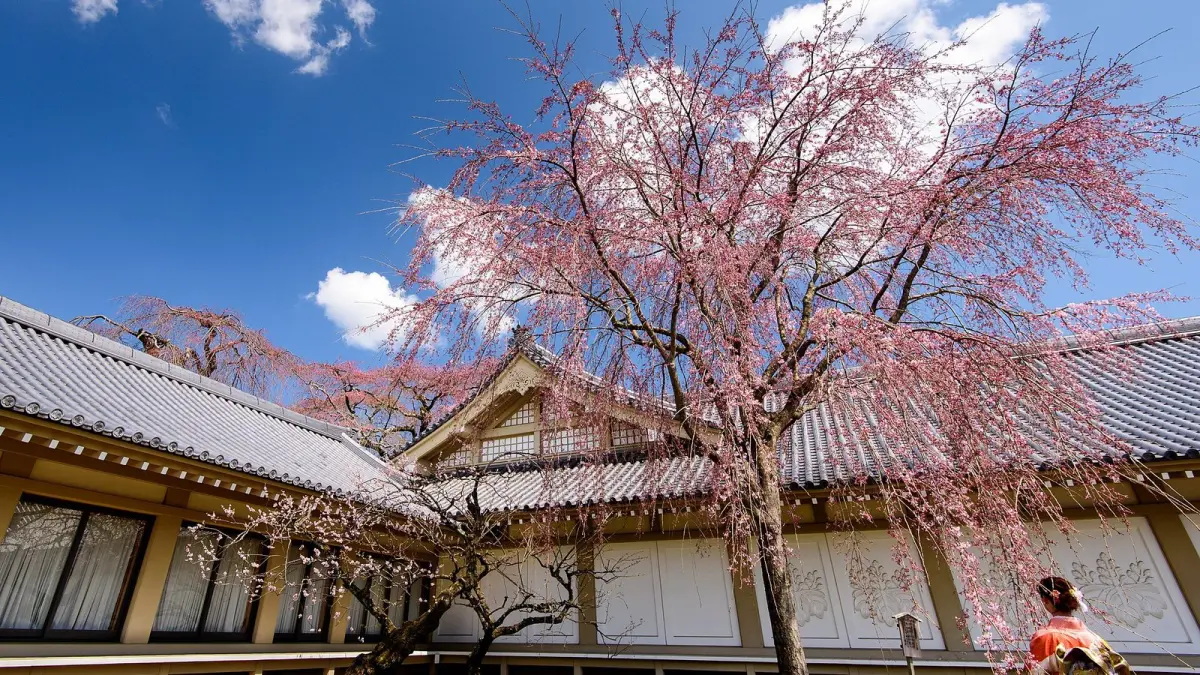
The best time to see cherry blossoms in Tokyo, Kyoto and Osaka is the last week of March and the first week of April; in Tokyo, the average first bloom date is 24 March, according to the JMA. Full bloom arrives about a week later and lasts only a few days, until wind and rain strip the petals.
The JMA declares the season open when at least five or six flowers have opened on a reference tree; Tokyo's stands at Yasukuni Shrine. The date shifts by about a week either way each year, depending on how mild the end of winter has been. In 2026, for example, Tokyo bloomed on 19 March, five days earlier than normal.
The blossom front moves from south to north. Okinawa has a variety that flowers in January, while Hokkaido does not see cherry blossoms until late April or early May. If your trip falls late, heading north gives you a second chance.
Cherry blossom 2027 forecast for Japan
There is no reliable cherry blossom forecast for 2027 yet: bloom dates depend on the temperatures of the coming winter. The JMA stopped issuing blossom forecasts after 2009 and now only records the observed dates; private forecasters such as Weathernews and the Japan Meteorological Corporation publish forecasts early in the year. If you are booking months ahead, plan around the averages above and keep a few days of flexibility.
When is the rainy season in Japan?
Japan's rainy season, called tsuyu, runs from June to mid-July over most of the country: in the Tokyo region, the JMA puts the average start on 7 June and the end on 19 July. It does not rain all the time, but there are many gray days, drizzle and some heavy downpours.
In Okinawa the rainy season starts and ends earlier, in May and June, and Hokkaido barely has one. June has advantages: fewer tourists and hydrangea gardens in full bloom. Pack an umbrella and shoes that do not mind water.
Japan rainy season in September and October
September and October are actually Tokyo's wettest months by total rainfall, with averages of about 225 and 235 mm (8.9 and 9.3 in), because of autumn rain fronts and typhoons. The difference from tsuyu is that the rain comes in heavier bursts with sunny spells between, rather than weeks of gray skies.
When is typhoon season in Japan?
Typhoon season in Japan runs from summer into autumn, with the highest chance of a strike in August and September. A typhoon is the same thing as a hurricane, only formed over the northwest Pacific; our guide on how hurricanes form explains the process.
Okinawa and southwestern Japan are the most exposed. When a typhoon approaches, flights, bullet trains and ferries are often canceled for a day or two, so leave slack in your itinerary if you travel at that time, and get insurance that covers cancellations. For typhoon warnings, always follow the JMA.
Summer is also very humid: at 30 °C (86 °F) with high humidity the heat feels intense, especially in the cities. Drink water often, plan outdoor sightseeing for early morning and learn the signs of heat stroke.
Best time to visit Japan in the fall
The best time to visit Japan in the fall is from mid-November to early December for autumn colors in Tokyo and Kyoto, when maples and ginkgo trees turn red and gold. In Hokkaido and the mountains, the colors start earlier, from late September and through October.
Late October and November combine the dry, settled weather that makes autumn so comfortable with a fading typhoon risk. Expect crowds in Kyoto's famous temple gardens on peak weekends, and book early.
Is it worth visiting Japan in winter?
Yes, if you like the cold: winter in Tokyo, Kyoto and Osaka is dry and sunny, with lows near 0 °C (32 °F) and little rain, while Hokkaido and the Sea of Japan coast get heavy snow. It is the season for skiing in Niseko or visiting the Sapporo Snow Festival in early February.
Kyoto's temples under snow are a beautiful sight, but snow in the city itself is occasional. Dress in layers: indoor spaces are heated, and the wind outside can bite.
How to use Clima de Hoy to plan your trip to Japan
About two weeks before you leave, check the 14 day forecast for Tokyo to get a sense of the trend, then fine-tune your plans with the hourly forecast in the last few days. Rainy days are perfect for museums, covered markets and onsen hot springs.
Keep in mind that more than a week out, a forecast shows trends, not hour-by-hour detail; our guide on how accurate long-range forecasts are explains why.
Frequently asked questions
What is the best month to visit Japan for weather?
The best months to visit Japan for weather are April, May, October and November. April brings the cherry blossoms, May is warm and settled, and November combines dry weather with autumn colors. They are also the busiest months, with the highest prices.
When should I go to Japan to see the cherry blossoms?
To see the cherry blossoms in Tokyo, Kyoto and Osaka, aim for the last week of March and the first week of April. The average first bloom in Tokyo is 24 March and full bloom comes about a week later. Because the date varies each year, check the blossom forecasts a few weeks before you travel.
What is the rainiest month in Japan?
In Tokyo, the rainiest months are September and October, with about 225 and 235 mm (8.9 and 9.3 in) on average, due to autumn rains and typhoons. June and July bring the tsuyu rainy season, with many gray days. December, January and February are the driest months.
How hot is Japan in summer?
Japan is hot and humid in summer. In August, Tokyo's average high is 31.3 °C (88 °F) and the average low is around 23.5 °C (74 °F), with very high humidity, and Kyoto is often hotter still. If you travel in summer, avoid the midday hours outdoors and drink water frequently.
Weather in your city
- Weather in Ciudad de México
- Weather in Londres
- Weather in Nueva York
- Weather in Bogotá
- Weather in Madrid
- Weather in Buenos Aires
- Weather in París
- Weather in Barcelona
- Weather in Valencia
- Weather in Sevilla
- Weather in Málaga
- Weather in Bilbao